

What credits measure
Building uses AI models, and Atomic counts that work in credits. Metered app hosting and persistent storage also consume credits. Builds, Plan answers, design suggestions and dictation all use credits, according to the work they take. Not every request costs the same. Starting an app from a template uses none, and nor does applying its screens unchanged. Changes you ask for afterwards use credits like any other request.
In the launch proposal, Free gives 250 credits once, while Builder includes 2,500 a month and Pro 5,000. Monthly credits reset at renewal and do not roll over; Free’s do not renew. On either paid plan, you can buy 1,000 additional credits for $10.
The launch proposal uses one value on every plan: 100 credits = $1 of Atomic usage. Usage is charged in fractions of a credit: 15 credits means $0.15 of usage. Credits measure resources consumed, not a fixed number of messages or completed apps. Purchased credits do not expire and are used after the monthly allowance. See Pricing for Free, Builder, and Pro allowances and paid-plan top-ups. Subscriptions are not open yet.
When credits run out
Atomic sets aside what a build may need before it starts. When there are not enough credits left, new builds are refused. Free users can upgrade to continue; paid users can wait for their monthly allowance to renew or buy additional credits. A build already running is not stopped by admission checks for new work. Published hosting and persistent storage also need funding; running out of build credits is not a promise of unlimited free hosting.
When your credits run out, your published apps pause: visitors see that the app is paused, open previews stop, and each app's data is kept. Adding credits, or your next monthly allowance, starts them again.
On Free, or once a subscription has ended, an app that stays paused for 30 days is permanently deleted: the app, its published site, its data and users, its source and every version. Deleted apps cannot be recovered. Atomic emails the account owner a week before and again a day before. The launch proposal also includes a protected hosting budget, to be confirmed before subscriptions open.
See where they went
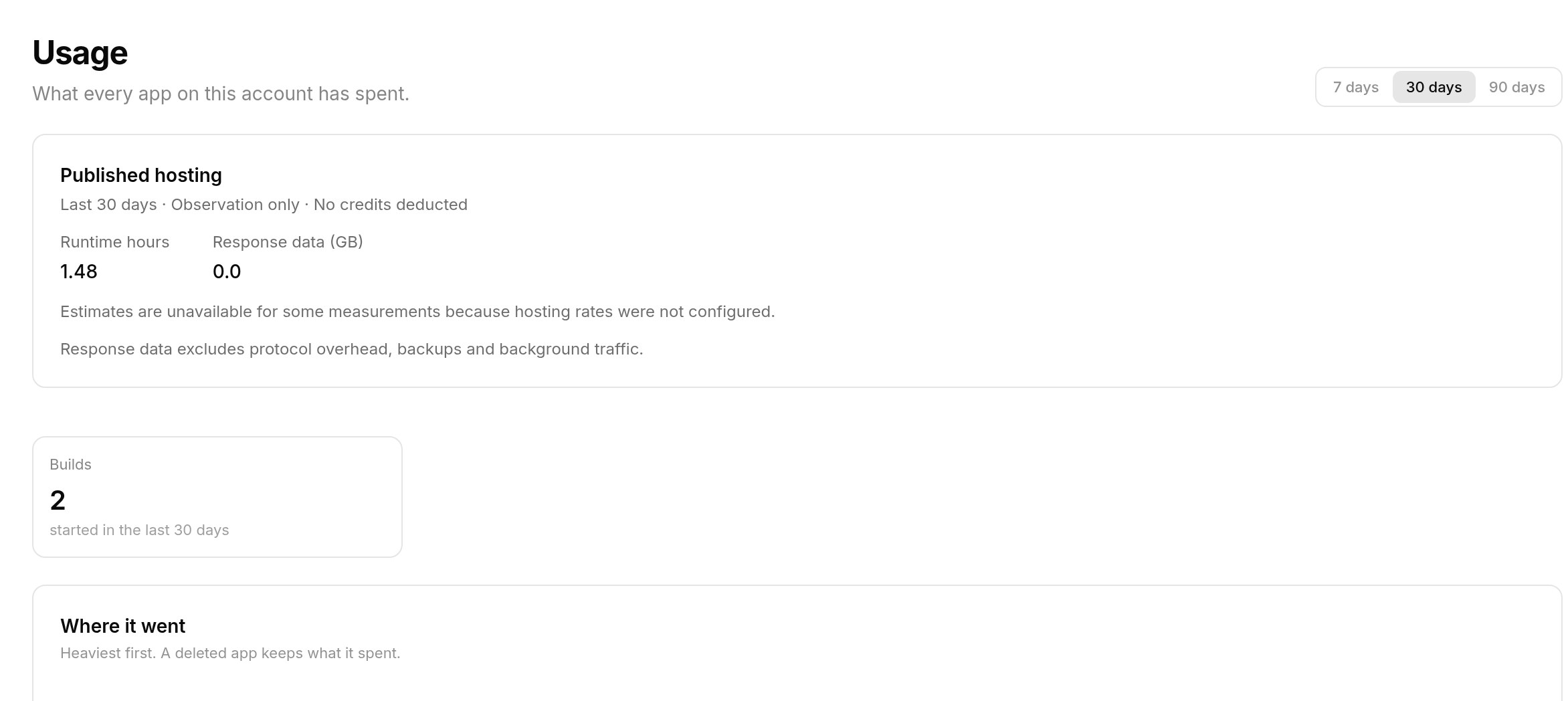
Usage in the sidebar shows what every app on your account has used over the last 7, 30 or 90 days: how many builds started, and where the credits went, heaviest first. A deleted app keeps what it used. The page also shows Published hosting: how many hours your published apps ran and how much data they served. That is for information only; no credits are deducted for hosting. Where billing is enabled, the page also offers credit packs and a link to your payment methods and receipts.
Each app has its own usage page too: open the app’s Dashboard and select See usage for its recent build sessions, with the credits and time each took. The Builds page shows what each individual build used.
Your plan
In the launch proposal, Free is for solo frontend building. Backend, database, user authentication, shared workspaces, and collaboration start with Builder. These plan restrictions describe the launch offer; they are not yet the rules of every early-access installation.
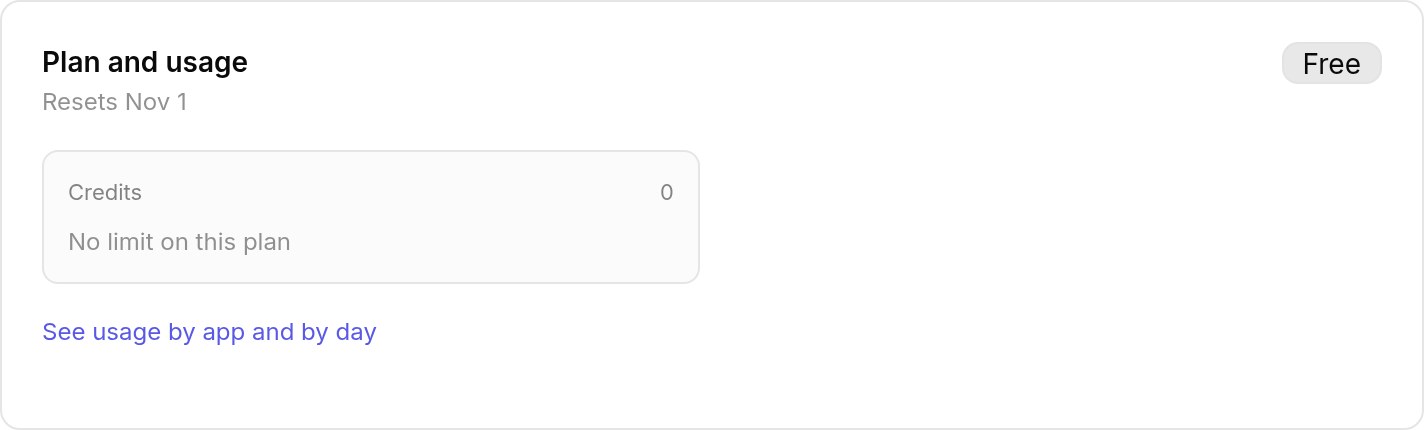
Settings shows your plan, the credits left this period and when they reset, with a way to upgrade where it is offered. Plans can also limit things other than credits, such as how many apps you have, how many are published at once, collaborators per app, and custom domains.
Work on an app is counted to the app’s owner, so building in someone else’s app uses their credits, not yours.